
The five most popular bench top materials and what you need to know about them.
 The five most popular bench top materials and what you need to know about them.
Laminate Benchtops
Description:
Laminate is made up of approximately 10 layers of paper impregnated with resins, then pressed together under heat. The last layer, or face, is the decorative paper sheet which gives the laminate the colour, patterns and texture. The thickness of the product is approximately 0.8mm thick. Commonly used for Kitchen bench tops when the laminate is pressed onto a thicker substrate material of usually 32mm.
Advantages:
- Impervious to water, it does not soak up water.
- Laminate is one of the most economical finishes on the market.
- Impact resistant. If you drop something on it, it is very unlikely that the laminate bench top will be damaged.
- Long lasting if treated well.
- Laminate comes in hundreds of colours and finishes.
Disadvantages:
- If you place a hot pan on a laminate bench top it can blister or even leave a brown circle.
- Where the laminate is joined (especially around a sink area), it is more susceptible to taking on moisture. This can cause swelling in the joint. Please note: The laminate itself does not swell but the timber based substrate under the laminate can absorb this water if it’s left to sit.
- High gloss finishes in a laminate can tend to wear quickly and show scratches.
Major Suppliers include: Polytec, Laminex, Formica, WilsonArt and Duropal.


Next Generation Man-Made Stone Benchtops
Description:
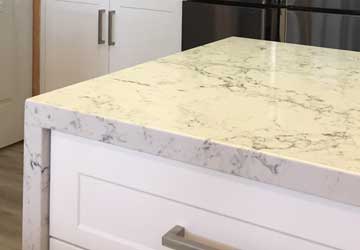
Next generation manmade stone benchtops offer the look and performance Australians love — without the health concerns associated with traditional engineered stone. Silicafree manmade stone benchtops are well suited to Australian kitchens, laundries and bathrooms, offering a practical balance of style and performance for busy households. Their lowmaintenance surface makes them a popular choice for families, renovators and new builds alike.
These innovative surfaces are silica free and manufactured using advanced mineral blends and binding technologies that deliver exceptional durability, consistency and design flexibility, while fully complying with current Australian regulations.
Because these products do not contain crystalline silica, they are not subject to the engineered stone ban and can be safely specified for new installations.
Peace of Mind, Built In
By choosing a silica free manmade benchtop, you’re selecting a material that:
- Meets current Australian safety and compliance requirements
- Supports safer manufacturing and installation practices
- Delivers long term performance without compromise
A Modern, Compliant Benchtop Solution
Designed for contemporary kitchens and laundries, silica free manmade stone provides:
- A smooth, nonporous surface that is easy to clean
- Excellent resistance to stains, scratches and everyday wear
- Consistent colouring and patterning across slabs
- A wide range of modern colours and finishes to suit any interior style
Disadvantages
- Colour may fade in direct sunlight
- Exposed leading edges are vulnerable to chips if hit with hard objects
- Can get expensive when selecting from the higher colour ranges
- Harsh cleaning chemicals like oven cleaner can eat away the surface finish
- Susceptible to thermal shock
Major Suppliers include: Caesarstone, Quantum Quartz, Smartstone, Stone Ambassador, Lithostone and Silestone



Natural Stone Benchtops
Description:
Offering lifetime elegance and unique beauty, Natural Stone is undoubtedly one of nature’s most precious creations. From the intensity and durability of Granite, the elegance of Marble, the exotic charm of Limestone and Travertine, Dolomite to the sheer brilliance of Onyx. The addition of modern technology allows for the stone to be finished in a variety of different ways such as polished, honed, exfoliated, brushed and flamed, once again offering designers and consumers a huge array of aesthetic possibilities.
Advantages:
- Slice of natural beauty from the Earth, every piece is unique
- Long lasting and durable (Stone choice dependant)
- Able to withstand higher levels of heat (Stone choice dependant)
Disadvantages:
- Requires maintenance- periodic sealing of the product to reduce surface absorption
- Colour can vary as it’s a Natural Stone
- Marble Bench tops can tend to show marks and be softer than other types of Stone- such as
Granite
Suppliers/Wholesalers include: Fine Stone Granite & marble and Project Stone (Local to Cut Above Kitchens and Cabinets)


Solid Surface Benchtops
Description:
Solid Surface benchtops are made from a premium acrylic product developed using the, latest technology and is increasing in consumer popularity. This is due to its flexibility and endless application possibilities available when using solid surfaces.
Advantages:
- Can be repaired
- Non-porous
- Stain Resistant, Scratch Resistant
- Seamless, inconspicuous Joins. Can have moulded/Integrated Basins and Sinks
- Minimal Maintenance
- Hygienic Anti-Bacterial (Food Zone Contact Approval – NSF51)
- Flexibility in Design to Customized Shapes, Applications, Edge Profiles and Inlays
- 100% renewable and repairable
- Available in a wide variety of colours to suit all decors
Disadvantages:
- Can get expensive to fabricate
Major Suppliers include: Corian, Staron, Hi-Macs and Meganite.



Solid Timber Benchtops
Description:
Solid Timber Benchtops are available in a range of Timbers available for all areas, including kitchens, bathrooms, offices, laundries and more. Benchtops can be finished with your choice of edging, joining, cut-outs and polishing and/or staining. All Timbers require an applied surface finish to seal the product to prevent moisture ingress. Solid Timber is a fantastic way if you are wanting a natural statement piece and bring some warmth into a space.
Advantages:
- Unique point of difference
- Can be sanded back to remove any surface damage
- Natural Product
Disadvantages:
- Depending on Timber Type, it can be a softer product to use as a Benchtop compared to other products on offer in the market
- Will require maintenance throughout its lifetime. Applied surface finishes tend to break down over time due to sunlight and wear and tear
- May get some water staining of the Timber around a Kitchen Sink
Popular species include: Pine, Tasmanian oak, Rosewood, Jarra, Blackbutt and Bamboo